
Client:
GoldRam Engineering & Development Ltd, Hong Kong Airport Authority
GoldRam Engineering & Development Ltd, Hong Kong Airport Authority link opens in a new tab
Project Description
The Hong Kong International Airport (IATA Code: HKG) developed a Three Runway System, reclaiming approximately 650 hectares of land to the north of the existing airport in the contract 3206. This three runway system exemplifies modern engineering efforts. Sixense was awarded the monitoring works in 2018.
Low Bearing Capacity
The reclamation was going to be performed on a thick layer (~10m) of very soft, slurry marine sediments. Airport construction often faces difficulties with such unconsolidated sediments. Conventional reclamation methods would require an excessive amount of dredging. Deep Cement Mixing (DCM) was proposed for this three runway system project, which was a more environmentally-friendly solution, a first in Hong Kong at the time.
Monitoring From Space, On Land, and Under The Sea
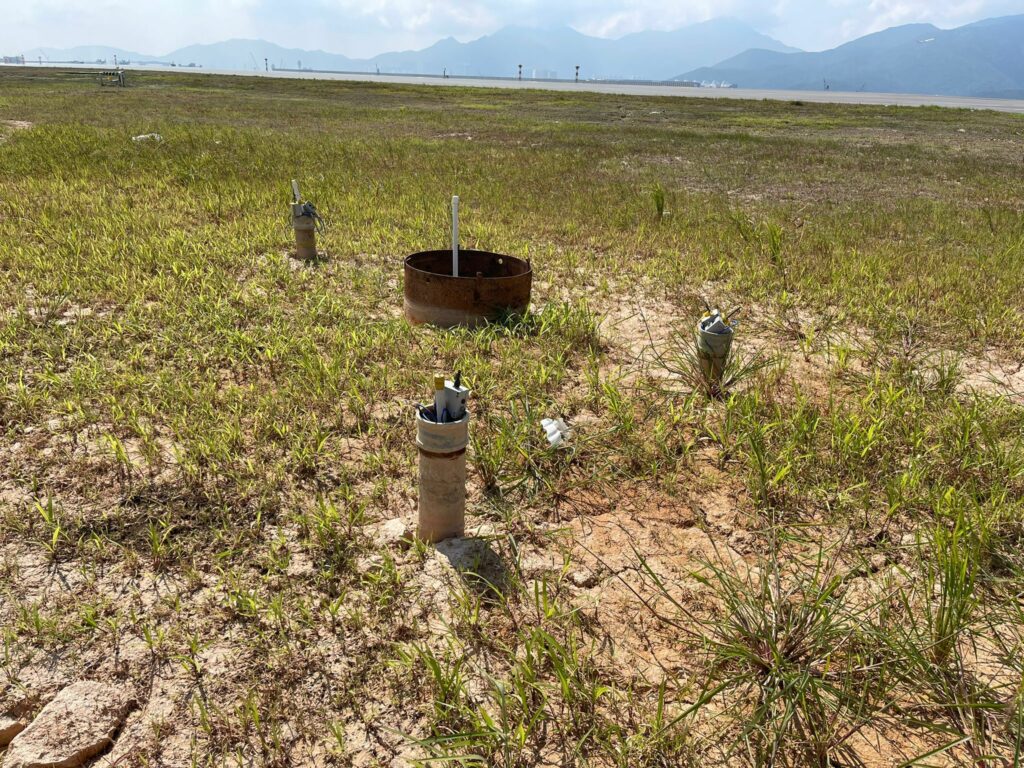
Sixense measured the potential deformation of the third runway reclamation site. Automatic groundwater monitoring devices, magnetic probe extensometers and inclinometers were placed around the perimeter of the site to measure the 3D movement of the deeper subsurface. Monitoring the site for the three runway system was crucial as it was prone to deformation, so monitoring had to be real-time to report any safety level breaches in near-real-time as well.
More than 1200 of our 4DBloc GNSS sensors were stationed around the reclamation site, monitoring the deformation of the ground surface and the shallow subsurface. The solution is more suitable than conventional automatic deformation monitoring in this application, as finding reference points is difficult when the site would be unstable as a whole. The airport’s monitoring was essential.
Sixense had also installed and monitored a number of instruments under the sea under the HKIA contract 3205.
Rising Above the Turbulent Sea
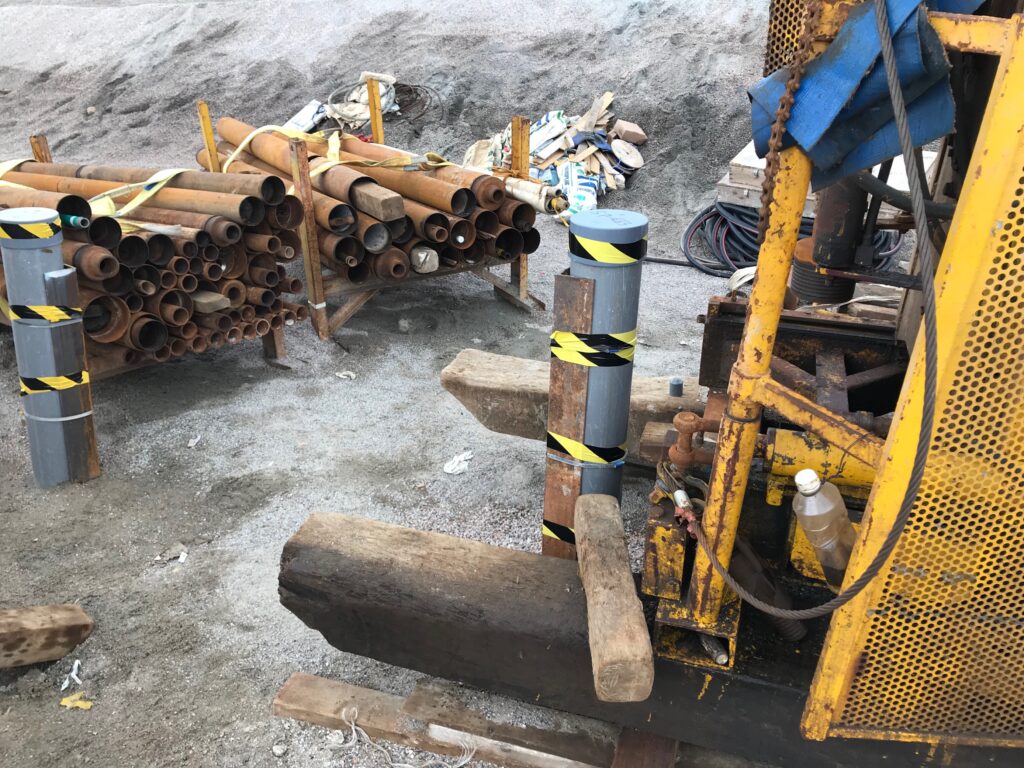
We encountered several challenges during the installation phase of the three runway system. Instruments had to be placed in deep drill holes reaching 80 meters below ground, increasing the risk of equipment failure. Moreover, installing sensors in seawater-saturated drill holes tested their water resistance and anti-corrosion capabilities. Despite these hurdles, Sixense successfully installed and monitored over 1,000 instruments at the third runway extension site over five years.
More than 30 team members contributed to maintaining the airport system. Sensors endured harsh weather conditions—sand obstructed solar panels, and typhoons rapidly eroded surface soil. Nevertheless, through diligent care, we consistently collected spatial data throughout the contract. Thanks to the system’s excellent handover condition, we were able to re-activate it promptly when the client requested additional monitoring for the three runway system.
Images of the project
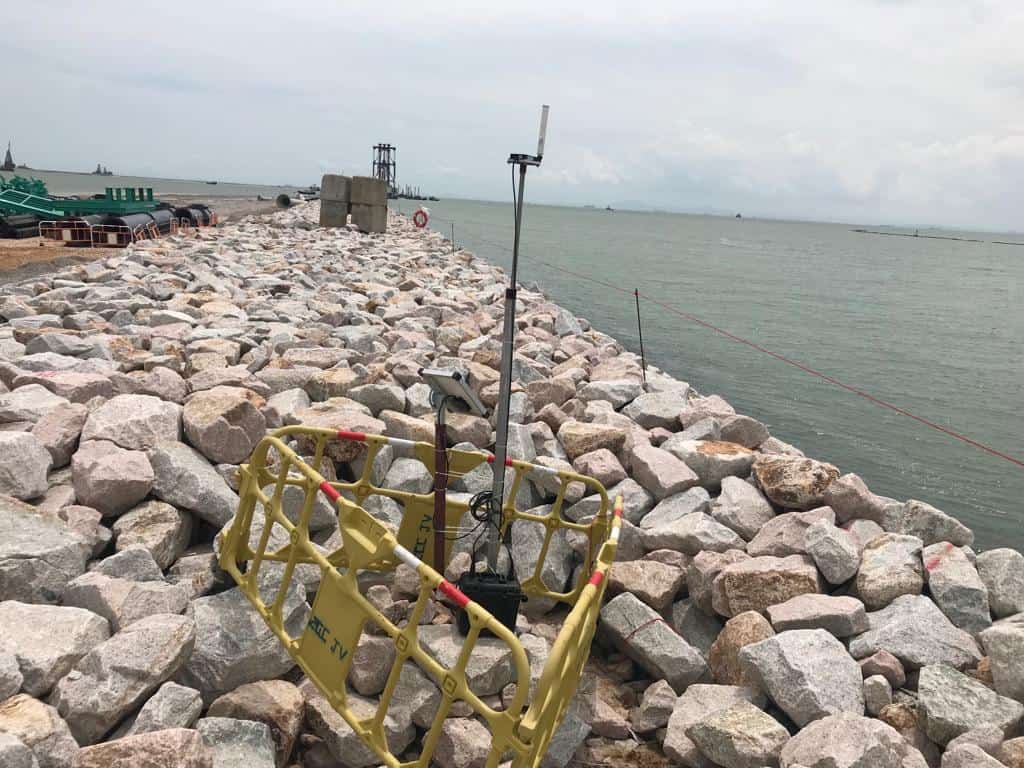
4DBloc
Magnetic Probe Extensometers
Automatic and manual inclinometers
Vibrating Wire Piezometers


